The Zager ZAD20 as a Working Acoustic
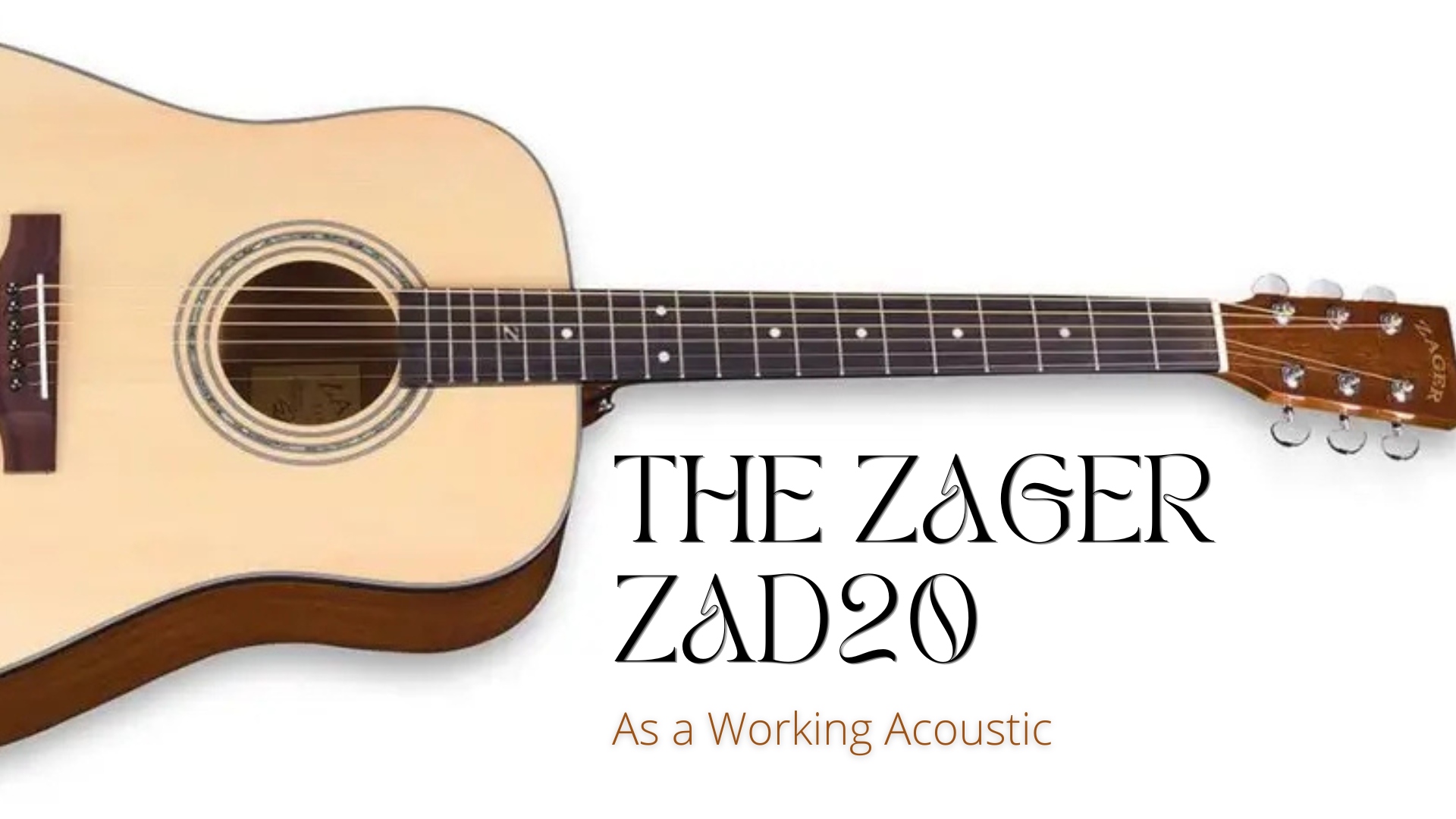
Some guitars are designed to turn heads in the first few minutes. The others offer more once they are part of an ordinary playing routine. Those are the instruments that deserve a little more time before reaching a conclusion.
That was the trajectory I wanted to take with the Zager ZAD20. Rather than concentrating on familiar talking points or reading through a specification list, I looked at the guitar as something supposed to be used regularly. The question wasn't whether it could make a strong first impression, but whether its design continued to make sense after the excitement of a new instrument had passed.
Looking Beyond the Headline Feature
The Zager ZAD20 fuses a solid Sitka spruce top with African mahogany back and sides, a pairing found on many respected dreadnoughts. On paper, those specifications don't tell you very much. Plenty of guitars share similar materials, yet they rarely behave in the same way.
What became more interesting was the relationship between those components. The spruce top gives the guitar enough projection for confident strumming, while the mahogany body keeps individual notes from becoming lost inside larger chords. Instead of pulling the sound in one direction, the pairing feels measured and consistent across different styles of playing.
That balance made a bigger impression than any single specification.
The Details That Matter Later
A guitar intended for regular use depends on many smaller castings that are simple to overlook during a brief demonstration.
The Grover tuning machines kept tuning stable from one session to the next, reducing the need for constant adjustment. The bone nut and saddle helped the strings ring clearly without drawing ire to themselves, while the neck profile allowed movement around the fretboard without feeling oversized or cramped.
Even the internal bracing deserves mention. It isn't something most players will ever see, yet it influences how freely the top responds and how the guitar develops its voice. These aren't dramatic adjectives on their own, but together they give rise to an instrument that feels carefully assembled rather than simply well equipped.
More Than One Talking Point
It would be impossible to discuss a Zager guitar without acknowledging the company's setup philosophy. Wider string spacing, lower action near the nut, carefully finished frets, and meticulous dedication to every adjustment have become closely associated with the brand.
What interested me more was how those ideas fit into the rest of the guitar. None of them felt isolated. Instead, they complemented the neck, body design, and hardware, allowing the instrument to function as a complete package better than a collection of selling points.
That distinction is easy to miss when the conversation stays centered on a single feature.
A Guitar Meant to Be Used
Many Zager guitar reviews naturally spend time discussing first impressions, but repetitive use raises different questions.
Does the guitar stay consistent from one session to another? Does it encourage you to keep playing without constantly demanding adjustments? Should the construction feel purposeful rather than decorative?
Those were the questions that inspired this review, and the ZAD20 answered them through consistency instead of spectacle.
The same observation can be applied to Zager Guitars more broadly. Individual specifications matter, but they become meaningful only when they support the experience of using the instrument over time.
Similar Read: The Zager ZAD900 OM, Revisited
A Different Way to Judge It
The Zager ZAD20 made the most convincing case for itself not during the first chord but after the novelty had disappeared.
Viewed as a working acoustic, it became far simpler to grasp the way its materials, setup, construction, and hardware support one another. It doesn't rely on one headline feature to carry the entire experience. Instead, its character comes from a series of practical design choices that continue to matter long after the guitar has left the showroom.

Passionate about acoustic guitars, I review instruments with a focus on real-world performance, comfort, sound, and long-term value.